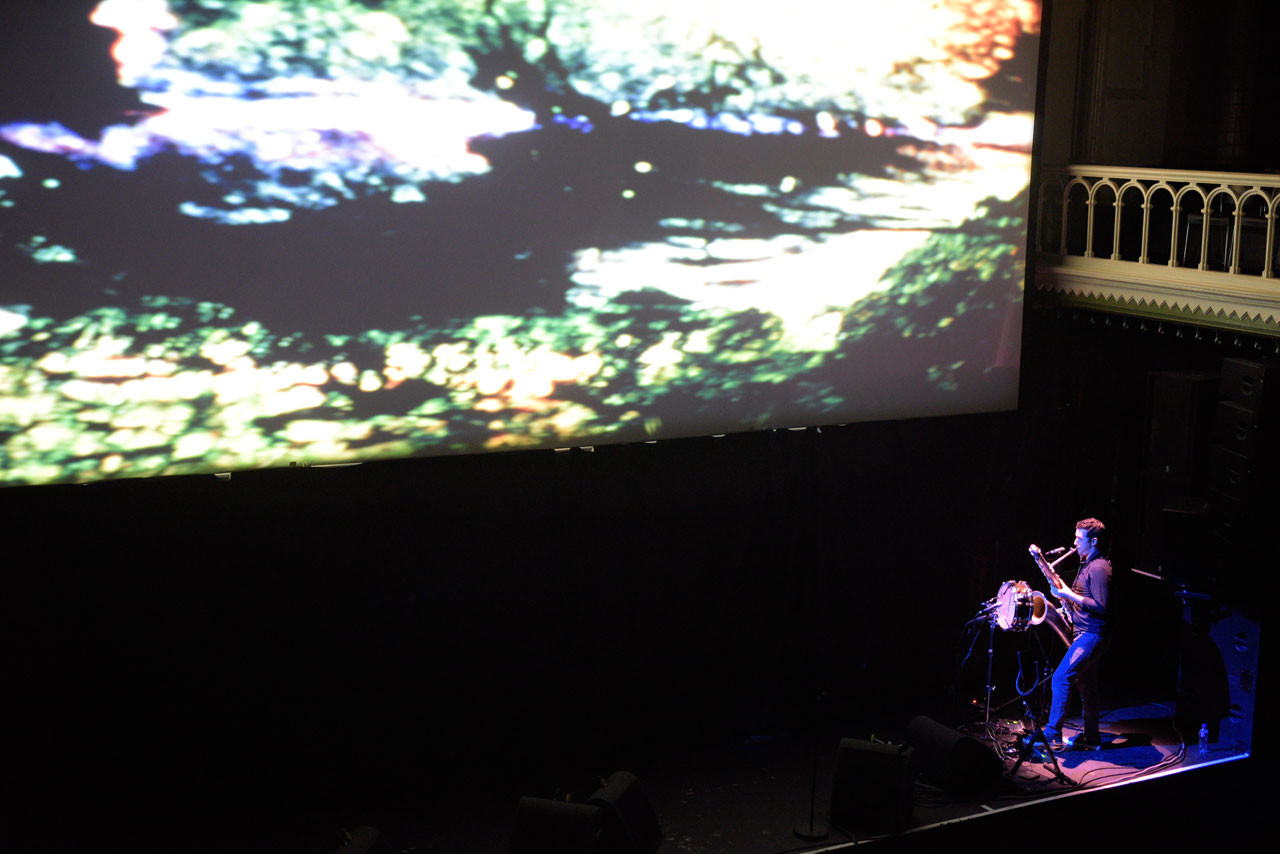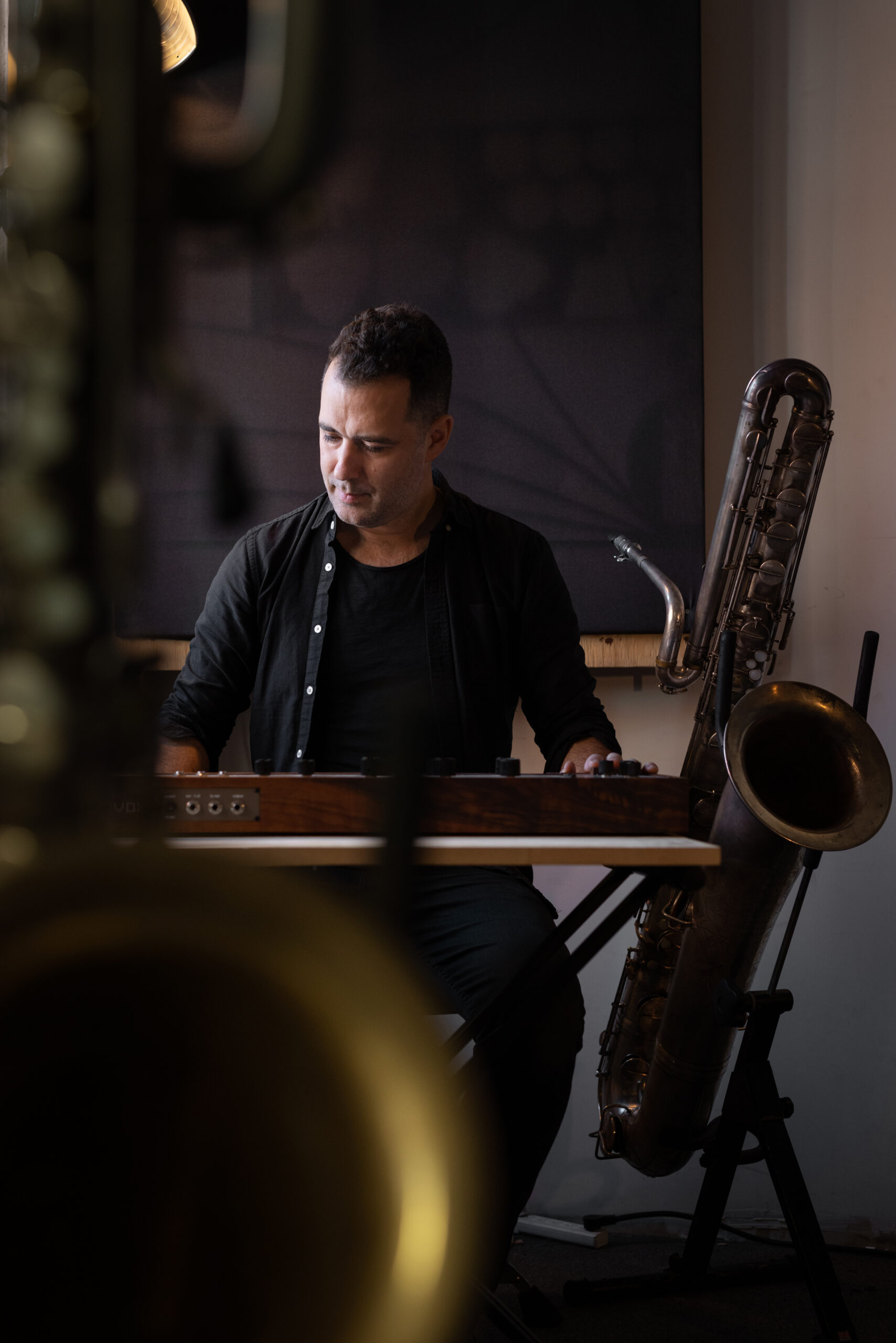
Jason Sharp is a Canadian saxophonist, electro-acoustic composer, producer and curator whose work explores the meeting point between the human body, acoustic instruments and electronic systems. A longtime figure in Montréal’s avant-jazz, experimental and improvisational music communities, Sharp has developed a distinctive musical language built from baritone and bass saxophone, modular synthesis, field recording, electronics and bespoke technologies that transform breath, movement and physiological signals into sound.
Sharp’s solo practice is grounded in an ongoing investigation of biofeedback and human-machine interaction. His custom electronic systems use amplified breath, heartbeat and physical gesture as compositional materials, allowing the body itself to become an active participant in the structure and evolution of a performance. The result is music that is simultaneously physical and electronic, rigorously composed and responsive to the unpredictable variability of live performance.
Sharp has released three albums under his own name on Montréal’s internationally renowned Constellation Records: A Boat Upon Its Blood (2016), Stand Above The Streams (2018), and The Turning Centre Of A Still World (2021). His third album, his first entirely solo recording, brought his exploration of saxophone, modular synthesis, amplified breath and heartbeat into its most concentrated form. The album was recorded and mixed by Radwan Ghazi Moumneh at Hotel2Tango and released alongside a visual collaboration with filmmaker Guillaume Vallée.
His work extends across contemporary music, improvisation, popular music and screen composition. Sharp has performed and recorded with artists including Roscoe Mitchell, Matana Roberts, Sam Shalabi’s Land of Kush, Thee Silver Mt. Zion Memorial Orchestra, Elisapie, Patrick Watson and Kaie Kellough, and has contributed saxophone and electronics to projects ranging from experimental ensembles to major recording artists. His credits include Leonard Cohen’s posthumous album Thanks for the Dance and Elisapie’s Polaris Prize-nominated The Ballad of the Runaway Girl.
As a composer for film and television, Sharp brings his experimental practice into narrative contexts, creating scores that move fluidly between acoustic instrumentation, electronics, synthesis, field recording and sound design. His screen work includes the Netflix feature The Decline (Jusqu’au Déclin), Daïchi Saïto’s earthearthearth, Arthur Erickson: Beauty Between the Lines, and the documentary series Mafia: Most Wanted, scored in collaboration with Jesse and Josh Zubot. The Mafia: Most Wanted score received a 2025 Canadian Screen Music Award nomination and a 2026 Canadian Screen Award nomination for Best Original Music, Documentary. Sharp was also part of the team behind Arthur Erickson: Beauty Between the Lines, which was nominated for a 2025 Leo Award for Best Musical Score in a Feature Length Documentary. His work as a screen composer was recognized with a 2023 SOCAN Award for International TV Music.
Sharp is also the founder and artistic leader of FYEAR, a collaborative ensemble created with poet and novelist Kaie Kellough. FYEAR brings together spoken word, electronics, processed saxophone, strings, pedal steel and percussion in large-scale multi-movement compositions. Their self-titled debut was released by Constellation Records in 2024 and presented internationally at festivals including Moers.
In 2024, Sharp relocated with his family from Montréal to Quadra Island, British Columbia, where his musical practice has expanded to include artistic curation and community-based cultural development. He is the Artistic Director of Quadra Concerts, where he curates an annual series of adventurous live performances that brings leading Canadian and international artists into dialogue with the island community.
Sharp’s work has been recognized with a 2023 SOCAN Award for International TV Music and a BC LIVE Presenter of the Year Award in 2025. Across his work as a performer, composer, producer and curator, he continues to pursue a simple but expansive question: how can sound become a living interface between the body, technology, environment and imagination?